I just found the documentary "The American Nightmare" for a student writing about horror films -- highly recommended look at the epic changes in the genre in the early 70s.
Showing posts with label Independent Filmmaking. Show all posts
Showing posts with label Independent Filmmaking. Show all posts
Wednesday, October 30, 2013

Saturday, May 25, 2013
C. Jerry Kutner: Cinema du WTF – Upstream Color (Shane Carruth 2013)
Cinema du WTF – UPSTREAM COLOR (Shane Carruth 2013)
by C. Jerry Kutner
Bright Lights Film Journal

A singular and highly accomplished independent film, Upstream Color is philosophical science fiction in the tradition of the French nouvelle vague, seasoned with a dash of Cronenbergian body horror. Like the SF films that emerged from the nouvelle vague – Chris Marker’s La Jetée, Alain Resnais’s Je t'aime je t'aime, Godard’s Alphaville, Bertrand Tavernier’s Death Watch – Upstream Color foregoes studio sets and elaborate special effects in favor of real locations and a concern with fundamental existential issues like the nature of free will, memory, perception, and time – what Raymond Durgnat once called the science fiction of “inner space.”
The body horror, reminiscent of early Cronenberg films like Rabid and Shivers (aka They Came From Within), comes from the film’s MacGuffin, a worm or grub found in the roots of orchids that secretes a drug, prized in certain circles for its psychotropic properties. If the worm is implanted in a victim, he or she becomes a virtual zombie, susceptible to any suggestion, obeying any command.
To say the film is enigmatic is an understatement. This might be the WTF film of 2013. Its complex story is told almost entirely through its visuals. There is minimal dialogue, and what there is of it is fragmentary, heard – or overhead – in bits and pieces. The visuals themselves are elliptical – we might be shown only the beginning, the middle, or the end of an action and have to infer the rest of it. Sometimes it is uncertain whether what we are looking at is literal or metaphoric. Chronology is scrambled. But the effect is not off-putting. On the contrary, this is an extraordinarily compelling film. Because we have to piece the narrative together ourselves, we pay closer attention.
Moreover, there is a sound basis for the film’s peculiarities of style. The two main characters, Kris (Amy Seimetz) and Jeff (writer/director Shane Carruth) are both victims of the worm – both brain-damaged. Consequently, we experience reality as they do.
To Read the Rest
by C. Jerry Kutner
Bright Lights Film Journal
A singular and highly accomplished independent film, Upstream Color is philosophical science fiction in the tradition of the French nouvelle vague, seasoned with a dash of Cronenbergian body horror. Like the SF films that emerged from the nouvelle vague – Chris Marker’s La Jetée, Alain Resnais’s Je t'aime je t'aime, Godard’s Alphaville, Bertrand Tavernier’s Death Watch – Upstream Color foregoes studio sets and elaborate special effects in favor of real locations and a concern with fundamental existential issues like the nature of free will, memory, perception, and time – what Raymond Durgnat once called the science fiction of “inner space.”
The body horror, reminiscent of early Cronenberg films like Rabid and Shivers (aka They Came From Within), comes from the film’s MacGuffin, a worm or grub found in the roots of orchids that secretes a drug, prized in certain circles for its psychotropic properties. If the worm is implanted in a victim, he or she becomes a virtual zombie, susceptible to any suggestion, obeying any command.
To say the film is enigmatic is an understatement. This might be the WTF film of 2013. Its complex story is told almost entirely through its visuals. There is minimal dialogue, and what there is of it is fragmentary, heard – or overhead – in bits and pieces. The visuals themselves are elliptical – we might be shown only the beginning, the middle, or the end of an action and have to infer the rest of it. Sometimes it is uncertain whether what we are looking at is literal or metaphoric. Chronology is scrambled. But the effect is not off-putting. On the contrary, this is an extraordinarily compelling film. Because we have to piece the narrative together ourselves, we pay closer attention.
Moreover, there is a sound basis for the film’s peculiarities of style. The two main characters, Kris (Amy Seimetz) and Jeff (writer/director Shane Carruth) are both victims of the worm – both brain-damaged. Consequently, we experience reality as they do.
To Read the Rest
Sunday, October 28, 2012
ENG 281 First Class Trip: Cloud Atlas (Germany/USA/Hong Kong/Singapore: Tom Tykwer, Andy Wachowski and Lana Wachowski, 2012)
[Michael: I'm currently working on two guest lectures for the coming week (on the Civil Rights Movement and Biotechnology/Ethics). When I come up for air I will start collecting the wave of thoughts, associations and impressions I have about this brilliant film. In the spirit of the film please share your thoughts and engage us across time/space.]

Cloud Atlas and Bound." Sound on Sight #337 (October 28, 2012)
Hemon, Aluksander. "Beyond the Matrix: The Wachowskis travel to even more mind-bending realms." The New Yorker (September 10, 2012)
McGrath, Charles. Bending Time, Bending Minds: Cloud Atlas, as Rendered by Tom Tykwer and the Wachowskis The New York Times (October 9, 2012)
Sicinski, Michael. "Star Maps: Wachowski/Tykwer/Wachowski’s Cloud Atlas." Cinema-Scope (2012)
Wachowski, Lana. "What it Means to Be Transgendered." Women and Hollywood (October 24, 2012)
Cloud Atlas and Bound." Sound on Sight #337 (October 28, 2012)
Hemon, Aluksander. "Beyond the Matrix: The Wachowskis travel to even more mind-bending realms." The New Yorker (September 10, 2012)
McGrath, Charles. Bending Time, Bending Minds: Cloud Atlas, as Rendered by Tom Tykwer and the Wachowskis The New York Times (October 9, 2012)
Sicinski, Michael. "Star Maps: Wachowski/Tykwer/Wachowski’s Cloud Atlas." Cinema-Scope (2012)
Wachowski, Lana. "What it Means to Be Transgendered." Women and Hollywood (October 24, 2012)
Tuesday, October 16, 2012
Spoiler Alert Radio: Paul Rachman - Acclaimed Filmmaker and Co-Founder of the Slamdance
Paul Rachman - Acclaimed Filmmaker and Co-Founder of the Slamdance - Drive Baby Drive, Four Dogs Playing Poker, Zoe XO/Zoe Rising, American Hardcore
Spoiler Alert Radio

Paul Rachman, filmmaker and co-founder of Slamdance, began his film career making underground hardcore punk films and music videos for bands such as Bad Brains, Gang Green, Negative FX, and Mission of Burma.
Paul quickly rose to become one of the of the industry's top music video directors at Propaganda Films in Los Angeles, where he worked with such artists as: Alice in Chains, The Replacements, Pantera, Temple of the Dog, Sepultura, Roger Waters, Joan Jett, and Kiss.
Paul has directed several award-winning short films, including: Memories with Joe Frank, Drive Baby Drive, Home, and Zoe XO. Paul has also directed the narrative feature Four Dogs Playing Poker.
Paul’s seminal punk documentary American Hardcore world premiered at the Sundance Film Festival and was picked up and theatrically released by Sony Pictures Classics.
Paul is working on a new documentary with American Hardcore writer Steven Blush, Lost Rockers, about great musiciaans over the years that have been overlooked by pop culture.
To Listen to the Episode
Spoiler Alert Radio
Paul Rachman, filmmaker and co-founder of Slamdance, began his film career making underground hardcore punk films and music videos for bands such as Bad Brains, Gang Green, Negative FX, and Mission of Burma.
Paul quickly rose to become one of the of the industry's top music video directors at Propaganda Films in Los Angeles, where he worked with such artists as: Alice in Chains, The Replacements, Pantera, Temple of the Dog, Sepultura, Roger Waters, Joan Jett, and Kiss.
Paul has directed several award-winning short films, including: Memories with Joe Frank, Drive Baby Drive, Home, and Zoe XO. Paul has also directed the narrative feature Four Dogs Playing Poker.
Paul’s seminal punk documentary American Hardcore world premiered at the Sundance Film Festival and was picked up and theatrically released by Sony Pictures Classics.
Paul is working on a new documentary with American Hardcore writer Steven Blush, Lost Rockers, about great musiciaans over the years that have been overlooked by pop culture.
To Listen to the Episode
Monday, October 15, 2012
Spoiler Alert Radio: Sean Kirby - Cinematographer on Police Beat, Zoo, Lovely Still, Against The Current and The Tillman Story
Sean Kirby - Cinematographer - Police Beat, Zoo, Lovely Still, Against The Current, The Tillman Story
Spoiler Alert Radio
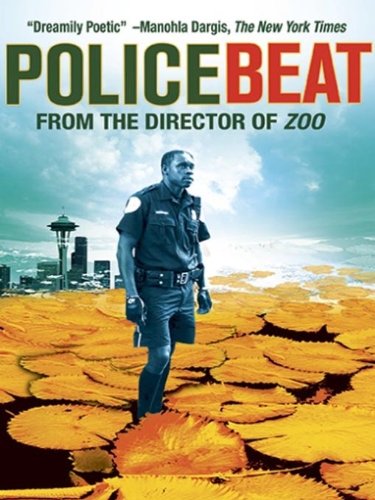
Cinematographer Sean Kirby shot the surreal film Police Beat, about an African-born bicycle cop encounters strange and mysterious situations on his police beat in urban Seattle.
In 2007, he re-teamed with writer/director team Robinson Devor and Charles Mudede and realized the controversial documentary Zoo about the life of an Enumclaw, Washington man who died as a result of an unusual encounter with a horse.
Some of his later credits include: Lovely Still, an emotionally moving holiday fable that tells the story of an elderly man discovering love for the first time, Against the Current, about a man, struggling with a tragic past, with an urgent calling who enlists two friends to help him swim the length of the Hudson River, starring Joseph Fiennes, and The Tillman Story, a documentary on the story of Pat Tillman.
To Listen to the Episode

Spoiler Alert Radio
Cinematographer Sean Kirby shot the surreal film Police Beat, about an African-born bicycle cop encounters strange and mysterious situations on his police beat in urban Seattle.
In 2007, he re-teamed with writer/director team Robinson Devor and Charles Mudede and realized the controversial documentary Zoo about the life of an Enumclaw, Washington man who died as a result of an unusual encounter with a horse.
Some of his later credits include: Lovely Still, an emotionally moving holiday fable that tells the story of an elderly man discovering love for the first time, Against the Current, about a man, struggling with a tragic past, with an urgent calling who enlists two friends to help him swim the length of the Hudson River, starring Joseph Fiennes, and The Tillman Story, a documentary on the story of Pat Tillman.
To Listen to the Episode
Monday, October 1, 2012
Joseph McBride: Political Filmmaking and America's "Poisoned Chalice" -- The Banned Gore Vidal Interview
Political Filmmaking and America's "Poisoned Chalice": The Banned Gore Vidal Interview
by Joseph McBride
Bright Lights Film Journal

...
The good news is that, as a result, it is becoming easier to make movies about politics: "There is a real chance, because the country's falling apart very rapidly. Audiences are going to be drawn either toward total Spielbergism — total escape from their fear of losing their jobs, fear of walking down the street — or to things that speak to them and bother them.
"It has to be done ingeniously, because if it's done like a civics lesson, it will put people to sleep."
Looking back over the spectrum of American political filmmaking, Vidal can find little enough that's been done ingeniously: "The few I know of which are realistic — as opposed to being Frank Capra fantasies or fairy tales — are Citizen Kane for the '40s, my own The Best Man for the '60s, The Candidate for the '70s, Tanner '88 for the '80s and now Bob Roberts for the '90s."
Bob Roberts, writer-director-star Tim Robbins' scathing satire of our current political malaise, offers in Robbins' folksinger-politician the most credible portrait of an American fascist I've seen in any movie since Edward Arnold's newspaper tycoon and political boss in Capra and Robert Riskin's 1941 Meet John Doe. Though distributed by Paramount in conjunction with Miramax, the low-budget ($4 million) Bob Roberts was made independently, with half the money coming from the U.K. after Robbins shopped the script around the conventional studio route without success.
It's amazing that a mass-market film was made on this subject, since it deals with issues usually addressed only in the alternative media — issues such as the systemic corruption of the establishment media and political institutions and the cynical manipulation of public sentiment in favor of the Gulf War.
To Read the Rest of the Interview
by Joseph McBride
Bright Lights Film Journal
...
The good news is that, as a result, it is becoming easier to make movies about politics: "There is a real chance, because the country's falling apart very rapidly. Audiences are going to be drawn either toward total Spielbergism — total escape from their fear of losing their jobs, fear of walking down the street — or to things that speak to them and bother them.
"It has to be done ingeniously, because if it's done like a civics lesson, it will put people to sleep."
Looking back over the spectrum of American political filmmaking, Vidal can find little enough that's been done ingeniously: "The few I know of which are realistic — as opposed to being Frank Capra fantasies or fairy tales — are Citizen Kane for the '40s, my own The Best Man for the '60s, The Candidate for the '70s, Tanner '88 for the '80s and now Bob Roberts for the '90s."
Bob Roberts, writer-director-star Tim Robbins' scathing satire of our current political malaise, offers in Robbins' folksinger-politician the most credible portrait of an American fascist I've seen in any movie since Edward Arnold's newspaper tycoon and political boss in Capra and Robert Riskin's 1941 Meet John Doe. Though distributed by Paramount in conjunction with Miramax, the low-budget ($4 million) Bob Roberts was made independently, with half the money coming from the U.K. after Robbins shopped the script around the conventional studio route without success.
It's amazing that a mass-market film was made on this subject, since it deals with issues usually addressed only in the alternative media — issues such as the systemic corruption of the establishment media and political institutions and the cynical manipulation of public sentiment in favor of the Gulf War.
To Read the Rest of the Interview
Thursday, September 27, 2012
ENG 281 Week 7: Shortbus (USA: John Cameron Mitchell, 2006)

Shortbus (USA: John Cameron Mitchell, 2006: 101 mins)
"In the old days, when you couldn't show sex on film, directors like Hitchcock had metaphors for sex (trains going into tunnels, etc). When you can show more realistic sex, the sex itself can be a metaphor for other parts of the character's lives. The way people express themselves sexually can tell you a lot about who they are. Some people ask me, 'Couldn't you have told the same story without the explicitness?'. They don't ask whether I could've done Hedwig without the songs. Why not be allowed to use every paint in the paintbox?" --John Cameron Mitchell, "How to Shoot Sex: A Docu-Primer" (2007): Shortbus Region 1 DVD release (Th!nk Film)
Adams, Tim. "Everybody's Doing It..." The Guardian (November 26, 2006)
Aftab, Kaleem. "Shortbus." Collective (November 30, 2006)
Ballard, J.G. "Car Crash"; "Sex x Technology = The Future"; "Pornography"; "How I Work." Quotes (San Francisco: Re:Search, 2004: 238-247; 277-279; 332-333.
Benton, Michael Dean. "American Sex and Sexuality 2.0" Dialogic(May 27, 2010)
---. "Gender and Sexuality at the Carnegie Center." North of Center (January 29, 2010)
---. "Getting off on John Cameron Mitchell’s Shortbus: American Sex and Sexuality." North of Center (March 30, 2011)
---. "Review of Straightlaced: How Gender’s Got Us All Tied Up." North of Center (October 13, 2010)
Browning, Barbara, et al. "The Lure and the Blur of the Real." Philoctetes (March 13, 2010)
Crowell, Steven. "Existentialism." Stanford Encyclopedia of Philosophy (Revised edition: 2010)
Dargis, Manohla. "Naughty and Nice in a Carnal Carnival." The New York Times (October 4, 2010)
Deep Throat (USA: Gerard Damiano, 1972: 61 mins)
Dubowski, Sandi. "Non-Stop Erotic Cabaret: John Cameron Mitchell pushes the sexual boundaries once again in Shortbus." Filmmaker (Fall 2006)
"Existentialism." Wikipedia
Fauth, Jürgen. "Shortbus." About (No Date)
Foucault, Michel. "Of Other Spaces." (This text, entitled "Des Espace Autres," and published by the French journal Architecture /Mouvement/ Continuité in October, 1984, was the basis of a lecture given by Michel Foucault in March 1967.)
Hudson, David. "Sex in the Movies." Green Cine (2005)
Jhally, Sut. "Codes of Gender: Identity and Performance in Popular Culture." (Media Education Foundation, 2009) [documentary--available online]
Lewis, Jon. "Real sex: aesthetics and economics of art-house porn." Jump Cut #51 (Spring 2009)
Macio. "Redefining Our Relationships: An Interview with Wendy-O Matik." Revolution By the Book (February 19, 2010)
Oshima, Nagisa. "Sexual Poverty" Cinema, Censorship, and the State: The Writings of Nagisa Oshima. The MIT Press, 1993
"Polyamory."
Wikipedia (No Date)
"Sexual Orientation." Wikipedia (No Date)
Shaw, Richard. "Are the U.S.A.'s Independent Films a Distinct National Cinema?" The Film Journal (2002)
Williams, Linda. "Film Bodies: Gender, Genre and Excess." Film Quarterly 44.4 (Summer 1991): 2-13.
---. "Hard-Core Art Film: The Contemporary Realm of the Senses." Quaderns portàtils #13 (2008)
Wypijewski, JoAnn. "Sexual Healing: Carnal Knowledge." The Nation (September 9, 2009)
Sunday, September 23, 2012
Naked Lunch Radio #12 – Superstar! The Todd Haynes Story
Naked Lunch Radio #12 – Superstar! The Todd Haynes Story
Sound on Sight

... a very special look at director Todd Haynes and all his movies from Velvet Goldmine to his new smash hit I’m Not There. A ton of great queer related Canadian rock and enough Dylan cover songs to keep you warm under the cold winter.
Hosted by Crystina Benyo & Sic Ric!
To Listen the Episode

Sound on Sight
... a very special look at director Todd Haynes and all his movies from Velvet Goldmine to his new smash hit I’m Not There. A ton of great queer related Canadian rock and enough Dylan cover songs to keep you warm under the cold winter.
Hosted by Crystina Benyo & Sic Ric!
To Listen the Episode
Friday, September 21, 2012
Andrew O'Hehir: "I Was Just Following Orders"
“I was just following orders”: Why are we so eager to obey authority, whether the boss, the TSA or the president? A new movie has some answers
By Andrew O'Hehir
Salon
All of us believe that we possess the strength and willpower to resist evil. Perhaps we do; who is to say? Most of us are not likely to face life-or-death situations out of Holocaust movies or “Star Trek” episodes. But a more important question – not to mention a more practical and ultimately far more disturbing one — is whether we will recognize evil when we encounter it, especially when it claims to be something else. As a former research subject wrote to Yale psychologist Stanley Milgram in 1970, “Few people ever realize when they are acting according to their own beliefs and when they are meekly submitting to authority.”
Every time I take my shoes off at the airport, and permit my person and possessions to be invaded by intrusive technologies for unclear reasons – meekly submitting to authority in the name of getting on the damn plane – I think about Milgram. (I am not suggesting that the TSA is evil, exactly, although you couldn’t really call it good.) By the time he received that letter, Milgram had become one of the most famous and controversial figures in the social sciences. In the early ‘60s, he had crafted a notorious series of experiments that suggested that most people, most of the time, were willing to obey the instructions of an authority figure, even when they involved delivering electrical shocks to strangers as part of a patently ludicrous “teaching” exercise.
Various complaints have subsequently been aired about Milgram’s ethics and methodology; while the electrical shocks were fake, the distress of his research subjects was all too real. Unfortunately for the human species, his findings have been replicated many times and in many contexts, and are now generally regarded as valid. While his colleagues and students predicted that only a minuscule proportion of experimental subjects would deliver the full (if fictional) voltage, more than 60 percent of them pushed the final button as instructed. It isn’t that we lack empathy or a sense of morality; most people in the Milgram experiments felt terrible about administering the shocks, and quite a few began crying or laughing or otherwise behaving erratically. But they went ahead and did it anyway, because a guy in a white coat was telling them to. (I don’t know whether this is mostly hilarious or mostly horrifying, but one post-Milgram experiment involved having subjects deliver real electric shocks to a real puppy — and most people did that too!)
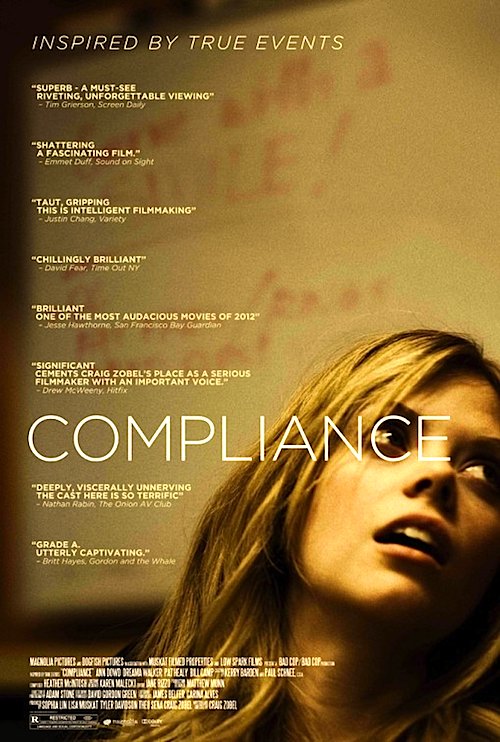
It may be impossible to exaggerate the historical and political ramifications of Milgram’s discoveries about humanity’s misplaced faith in authority, which would seem to shed light on everything from Auschwitz to Abu Ghraib to the fact that we’ve apparently all agreed in 2012 that it’s OK for the president of the United States to kill whoever he wants to without providing a reason. (Milgram was inspired by the widely publicized trial of Nazi war criminal and Holocaust engineer Adolf Eichmann, a mild-mannered fellow who claimed to have no particular antipathy for Jews.) But on an intimate level these ideas can still prove shocking or unacceptable, as they do in “Compliance,” a nail-biting thriller from indie writer-director Craig Zobel that has been dividing, energizing and alienating audiences since its Sundance premiere earlier this year.
On one level “Compliance” dramatizes a Milgram-like scenario, but more importantly it acts out a psychological experiment of its own, right there in the theater. This film is not set in Nazi Germany or Iraq or Gotham City under the rule of a supervillain. It takes place in an unidentified American suburb or exurb, almost entirely inside a fast food restaurant whose employees are cajoled and coerced by an official-sounding voice on the telephone into imprisoning, humiliating, strip-searching and finally abusing one of their co-workers. As a fictional premise that may sound outrageous, but some readers will surely remember that there was a wave of such real-life cases in the late 1990s and early 2000s. Zobel is drawing primarily on the last and most notorious of these, an April 2004 episode at a McDonald’s in Mt. Washington, Ky., where a young female employee was detained for several hours against her will and subjected to escalating and improbable levels of degradation.
To Read the Rest of the Essay
By Andrew O'Hehir
Salon
All of us believe that we possess the strength and willpower to resist evil. Perhaps we do; who is to say? Most of us are not likely to face life-or-death situations out of Holocaust movies or “Star Trek” episodes. But a more important question – not to mention a more practical and ultimately far more disturbing one — is whether we will recognize evil when we encounter it, especially when it claims to be something else. As a former research subject wrote to Yale psychologist Stanley Milgram in 1970, “Few people ever realize when they are acting according to their own beliefs and when they are meekly submitting to authority.”
Every time I take my shoes off at the airport, and permit my person and possessions to be invaded by intrusive technologies for unclear reasons – meekly submitting to authority in the name of getting on the damn plane – I think about Milgram. (I am not suggesting that the TSA is evil, exactly, although you couldn’t really call it good.) By the time he received that letter, Milgram had become one of the most famous and controversial figures in the social sciences. In the early ‘60s, he had crafted a notorious series of experiments that suggested that most people, most of the time, were willing to obey the instructions of an authority figure, even when they involved delivering electrical shocks to strangers as part of a patently ludicrous “teaching” exercise.
Various complaints have subsequently been aired about Milgram’s ethics and methodology; while the electrical shocks were fake, the distress of his research subjects was all too real. Unfortunately for the human species, his findings have been replicated many times and in many contexts, and are now generally regarded as valid. While his colleagues and students predicted that only a minuscule proportion of experimental subjects would deliver the full (if fictional) voltage, more than 60 percent of them pushed the final button as instructed. It isn’t that we lack empathy or a sense of morality; most people in the Milgram experiments felt terrible about administering the shocks, and quite a few began crying or laughing or otherwise behaving erratically. But they went ahead and did it anyway, because a guy in a white coat was telling them to. (I don’t know whether this is mostly hilarious or mostly horrifying, but one post-Milgram experiment involved having subjects deliver real electric shocks to a real puppy — and most people did that too!)
It may be impossible to exaggerate the historical and political ramifications of Milgram’s discoveries about humanity’s misplaced faith in authority, which would seem to shed light on everything from Auschwitz to Abu Ghraib to the fact that we’ve apparently all agreed in 2012 that it’s OK for the president of the United States to kill whoever he wants to without providing a reason. (Milgram was inspired by the widely publicized trial of Nazi war criminal and Holocaust engineer Adolf Eichmann, a mild-mannered fellow who claimed to have no particular antipathy for Jews.) But on an intimate level these ideas can still prove shocking or unacceptable, as they do in “Compliance,” a nail-biting thriller from indie writer-director Craig Zobel that has been dividing, energizing and alienating audiences since its Sundance premiere earlier this year.
On one level “Compliance” dramatizes a Milgram-like scenario, but more importantly it acts out a psychological experiment of its own, right there in the theater. This film is not set in Nazi Germany or Iraq or Gotham City under the rule of a supervillain. It takes place in an unidentified American suburb or exurb, almost entirely inside a fast food restaurant whose employees are cajoled and coerced by an official-sounding voice on the telephone into imprisoning, humiliating, strip-searching and finally abusing one of their co-workers. As a fictional premise that may sound outrageous, but some readers will surely remember that there was a wave of such real-life cases in the late 1990s and early 2000s. Zobel is drawing primarily on the last and most notorious of these, an April 2004 episode at a McDonald’s in Mt. Washington, Ky., where a young female employee was detained for several hours against her will and subjected to escalating and improbable levels of degradation.
To Read the Rest of the Essay
Thursday, April 19, 2012
Bill Mesce: Remember Me -- Ben Gazzara
Remember Me: Ben Gazzara
by Bill Mesce
Sound on Sight

...
In Husbands, Cassavetes, Gazzara, and Peter Falk play three long-time friends who react to the death of another buddy with a midlife crisis bender of booze and a jaunt to London. Think The Hangover – but serious and for grown-ups.
Like much of Cassavetes’ work, Husbands has the shapelessness and shambling pace of life, the same sense of spontaneity, the same chaotic tumbling of the comedic into the tragic. It’s a demanding watch, but a rewarding one, almost uncomfortable at times in its feel of intruding into the real.
The heart of the movie is the give-and-go between the three leading men, and it may be one of the most honest and vibrant portraits of male friendship – with all its awkward intimacy and macho bullshit – captured on film. The bond between the three seems so damned real, it’s a surprise to find out that the three hadn’t known each other before Husbands.
Watching the film, seeing how open and vulnerable the three made themselves to each other, at the obvious chemistry among them, it’s no surprise they came out of the project friends. Gazzara would act for Cassavetes twice more, in The Killing of a Chinese Bookie (1976) and Opening Night (1977), and direct several episodes of Falk’s hit TV series, Columbo, including one starring Cassavetes as a philandering orchestra conductor.
But if you really want to see how closely tied the film brought them, go to YouTube and find them on an episode of The Dick Cavett Show being interviewed about the film. It puts Danny DeVito and his limoncello hangover on The View to shame. On the one hand, it’s appalling to see three grown – and obviously half-crocked — men cackling and falling over themselves on network television like kids farting in the back pew during mass.
On the other hand, it seems almost a scene from Husbands, and shows just how right the three of them had gotten it on film. Some things you can’t create; you can only hope to capture.
Husbands, Chinese Bookie, et al was not work Gazzara or the others did for fame and fortune. These were art house films before there was much of an art house circuit. Most people didn’t hear about them, even fewer went to see them. It was work done for the sake of doing; art for art’s sake. Film actors tend to be judged by their commercial successes and their visibility; not their willingness to explore the art. In that sense, Gazzara’s artistry was bigger than his career.
To Read the Entire Essay

by Bill Mesce
Sound on Sight
...
In Husbands, Cassavetes, Gazzara, and Peter Falk play three long-time friends who react to the death of another buddy with a midlife crisis bender of booze and a jaunt to London. Think The Hangover – but serious and for grown-ups.
Like much of Cassavetes’ work, Husbands has the shapelessness and shambling pace of life, the same sense of spontaneity, the same chaotic tumbling of the comedic into the tragic. It’s a demanding watch, but a rewarding one, almost uncomfortable at times in its feel of intruding into the real.
The heart of the movie is the give-and-go between the three leading men, and it may be one of the most honest and vibrant portraits of male friendship – with all its awkward intimacy and macho bullshit – captured on film. The bond between the three seems so damned real, it’s a surprise to find out that the three hadn’t known each other before Husbands.
Watching the film, seeing how open and vulnerable the three made themselves to each other, at the obvious chemistry among them, it’s no surprise they came out of the project friends. Gazzara would act for Cassavetes twice more, in The Killing of a Chinese Bookie (1976) and Opening Night (1977), and direct several episodes of Falk’s hit TV series, Columbo, including one starring Cassavetes as a philandering orchestra conductor.
But if you really want to see how closely tied the film brought them, go to YouTube and find them on an episode of The Dick Cavett Show being interviewed about the film. It puts Danny DeVito and his limoncello hangover on The View to shame. On the one hand, it’s appalling to see three grown – and obviously half-crocked — men cackling and falling over themselves on network television like kids farting in the back pew during mass.
On the other hand, it seems almost a scene from Husbands, and shows just how right the three of them had gotten it on film. Some things you can’t create; you can only hope to capture.
Husbands, Chinese Bookie, et al was not work Gazzara or the others did for fame and fortune. These were art house films before there was much of an art house circuit. Most people didn’t hear about them, even fewer went to see them. It was work done for the sake of doing; art for art’s sake. Film actors tend to be judged by their commercial successes and their visibility; not their willingness to explore the art. In that sense, Gazzara’s artistry was bigger than his career.
To Read the Entire Essay
Sunday, February 19, 2012
Michael Dean Benton: Getting off on John Cameron Mitchell’s Shortbus
Getting off on John Cameron Mitchell’s Shortbus
By Michael Dean Benton
North of Center

It is a common truism that reality can’t be copyrighted, but it can be manufactured, packaged, and marketed. Increasingly in our interconnected and digital world we are confronted by a plethora of images designed to influence us to buy certain realities. No images are more prevalent or artificial than the images of sex as products that circulate throughout American culture. From marketing pitches, to romance novels, to feature films, to internet peep shows: we are a prudish society that feeds on illusions of sex.
In these circulating narratives, from the idealistically romantic fairy tales of Hallmark and Hollywood to the mindless sexual Olympics of contemporary pornography, sex is represented as a skill to be mastered in an individualistic quest to be number one. Interpersonal relations are psychological mind games which involve prescribed “rules” for success, and the pursuit of sexual fulfillment becomes a modern variant of bucket-listing as we check off various acts necessary to feel good about ourselves.
If we fail to perform to the level of these constructed fantasies then there is a new pharmaceutical pill (for a price) to make us hard, to renew our vigor, or to chase away our anxieties. If we feel our interpersonal skills need polishing there is always the advice of a new guru, in a multitude of packaged forms, presented for a fee, available to ease your anxieties.
Unrealistic body images, as destructive as they are in the development of our self-image and self-confidence, are doubled in their effect by the unrealistic expectations of contemporary sexual myths. In American society, sexuality is often understood as a private and sacrosanct aspect of our identity. Fragmented, separated, isolated, impermeable, we become easier targets for unrealistic myths and romantic fantasies.
John Cameron Mitchell’s 2006 film Shortbus is an honest exploration of a society that fetishizes sex, but rarely truthfully addresses issues of human sexuality. Despite the uncensored trailer’s emphasis (easily googled), the very real sex in the film is minimal, although very explicit. Instead, Shortbus is a powerful exploration of our psychosexual hang-ups, our collective/individual pain (the setting is post 9/11 New York City), the need for a candid exploration of human sexuality and, most importantly, the redemptive power of human engagement.
The first ten minutes are sexually explicit and, even though I was watching it at home the first time, I felt myself blush intensely (verified in a bathroom mirror). It is as if Mitchell is throwing down a gauntlet and challenging us to engage the most banal sexual mythoi that circulate in our mindscapes. Then, once these are operating, as the multi-character scenes climax (so to speak) he begins his critique of individualized, fragmented sexuality.
The film is a powerful visualization of collective exploration and discussion of sexuality in many ways. Most importantly, it is enacted through the actual visualization and production of the overall project. Coming off the cult success of Hedwig and the Angry Inch (2001), Mitchell decided his next project would be a collective exploration of sex and sexuality in America. His production team advertised the project as the “Sex” film and encouraged interested participants to send in a ten minute tape in which they describe an important sexual experience.
In one of the documentaries on the DVD version you can see the tapes sent in by the actors and notice how their actual personalities are infused into the roles they play in the film. In the extras we see Mitchell and a collaborator picking up the tapes as people in New York City are protesting the impending invasion of Iraq. This fearful, deranged, post-9/11 panorama becomes incorporated into the subconscious of the film.
Mitchell did not write a fleshed-out script until he had auditioned actors and made the selections of who would be participating in the project. When he had a set cast, they began to improvise and develop their individual roles as an understanding of the collective project began to develop.
Some of the actors dropped out of the project because they feared the damage that it could do to their burgeoning careers. Perhaps they were afraid of being typecast or labeled by the Hollywood system as an actor who performs in “those” types of films. Other actors were unable to continue because they eventually became incapable of mentally separating themselves from their roles and allowing the characters to develop collectively.
We can see in the development of the film the intense feelings and emotions that circulated throughout these workshops and improvisations. Through their hardships, the cast and crew became more of a unique collective family or affinity group. This brings an authenticity to the performances that is generally lacking in the casting of strangers to perform in a film.
In discussions about this film, the question often raised is whether or not it is pornography. I usually field responses before replying, wishing to develop a collective understanding of pornography and its role in our society. Most people follow the famous judicial claim that pornography is the portrayal of sexual acts bereft of any actual artistic or culturally redeeming manner. In other words, if you removed the sex, would anything be left?
I follow a more complicated description and understanding. Pornography is a fragmented portrayal of human society which emphasizes the individual parts over the holistic beings, that denies the humanity of the participants, and that turns sex solely into a product for consumption. Pornography is all about impermeable sex: penetration without connection, orgasms without feeling.
Shortbus is the opposite of pornography. It is actually a film about permeability. The three main characters are in search of genuine human interactions. Yes, sex and sexuality are vitally important to them, but it is contextualized in a fuller landscape of human connection and interaction. Impermeability is a dangerous dysfunction. It is the mindset of those who are not open to others, whether they are individually unfeeling or culturally closed. It is solipsism—individually or collectively. Permeability is the willingness to be open to new experiences and new ways of seeing the world. It is not necessary that you live your life as these characters do, it is more of a willingness to not view the new or different as dangerous.
Of course, the film is about sex and, in its unflinching exploration, it will challenge many people. I am amazed at people’s willingness to sit through the most brutal acts of violence and destruction, yet they become agitated and disturbed by honest portrayals of sexuality. I have witnessed people walk out during certain parts of Shortbus. I also have had people get angry at me for suggesting the film to them.
For me, it is one of the most powerfully emotional films of the 21st Century. I usually cry during certain parts of the film because I empathize with the struggle of the characters. The power of the film is that it views the answers in the collective community rather in the authority of “experts” or the prescriptions of the pharmaceutical industry. It is a deeply utopian film that calls us to get off on life.
Link
By Michael Dean Benton
North of Center
It is a common truism that reality can’t be copyrighted, but it can be manufactured, packaged, and marketed. Increasingly in our interconnected and digital world we are confronted by a plethora of images designed to influence us to buy certain realities. No images are more prevalent or artificial than the images of sex as products that circulate throughout American culture. From marketing pitches, to romance novels, to feature films, to internet peep shows: we are a prudish society that feeds on illusions of sex.
In these circulating narratives, from the idealistically romantic fairy tales of Hallmark and Hollywood to the mindless sexual Olympics of contemporary pornography, sex is represented as a skill to be mastered in an individualistic quest to be number one. Interpersonal relations are psychological mind games which involve prescribed “rules” for success, and the pursuit of sexual fulfillment becomes a modern variant of bucket-listing as we check off various acts necessary to feel good about ourselves.
If we fail to perform to the level of these constructed fantasies then there is a new pharmaceutical pill (for a price) to make us hard, to renew our vigor, or to chase away our anxieties. If we feel our interpersonal skills need polishing there is always the advice of a new guru, in a multitude of packaged forms, presented for a fee, available to ease your anxieties.
Unrealistic body images, as destructive as they are in the development of our self-image and self-confidence, are doubled in their effect by the unrealistic expectations of contemporary sexual myths. In American society, sexuality is often understood as a private and sacrosanct aspect of our identity. Fragmented, separated, isolated, impermeable, we become easier targets for unrealistic myths and romantic fantasies.
John Cameron Mitchell’s 2006 film Shortbus is an honest exploration of a society that fetishizes sex, but rarely truthfully addresses issues of human sexuality. Despite the uncensored trailer’s emphasis (easily googled), the very real sex in the film is minimal, although very explicit. Instead, Shortbus is a powerful exploration of our psychosexual hang-ups, our collective/individual pain (the setting is post 9/11 New York City), the need for a candid exploration of human sexuality and, most importantly, the redemptive power of human engagement.
The first ten minutes are sexually explicit and, even though I was watching it at home the first time, I felt myself blush intensely (verified in a bathroom mirror). It is as if Mitchell is throwing down a gauntlet and challenging us to engage the most banal sexual mythoi that circulate in our mindscapes. Then, once these are operating, as the multi-character scenes climax (so to speak) he begins his critique of individualized, fragmented sexuality.
The film is a powerful visualization of collective exploration and discussion of sexuality in many ways. Most importantly, it is enacted through the actual visualization and production of the overall project. Coming off the cult success of Hedwig and the Angry Inch (2001), Mitchell decided his next project would be a collective exploration of sex and sexuality in America. His production team advertised the project as the “Sex” film and encouraged interested participants to send in a ten minute tape in which they describe an important sexual experience.
In one of the documentaries on the DVD version you can see the tapes sent in by the actors and notice how their actual personalities are infused into the roles they play in the film. In the extras we see Mitchell and a collaborator picking up the tapes as people in New York City are protesting the impending invasion of Iraq. This fearful, deranged, post-9/11 panorama becomes incorporated into the subconscious of the film.
Mitchell did not write a fleshed-out script until he had auditioned actors and made the selections of who would be participating in the project. When he had a set cast, they began to improvise and develop their individual roles as an understanding of the collective project began to develop.
Some of the actors dropped out of the project because they feared the damage that it could do to their burgeoning careers. Perhaps they were afraid of being typecast or labeled by the Hollywood system as an actor who performs in “those” types of films. Other actors were unable to continue because they eventually became incapable of mentally separating themselves from their roles and allowing the characters to develop collectively.
We can see in the development of the film the intense feelings and emotions that circulated throughout these workshops and improvisations. Through their hardships, the cast and crew became more of a unique collective family or affinity group. This brings an authenticity to the performances that is generally lacking in the casting of strangers to perform in a film.
In discussions about this film, the question often raised is whether or not it is pornography. I usually field responses before replying, wishing to develop a collective understanding of pornography and its role in our society. Most people follow the famous judicial claim that pornography is the portrayal of sexual acts bereft of any actual artistic or culturally redeeming manner. In other words, if you removed the sex, would anything be left?
I follow a more complicated description and understanding. Pornography is a fragmented portrayal of human society which emphasizes the individual parts over the holistic beings, that denies the humanity of the participants, and that turns sex solely into a product for consumption. Pornography is all about impermeable sex: penetration without connection, orgasms without feeling.
Shortbus is the opposite of pornography. It is actually a film about permeability. The three main characters are in search of genuine human interactions. Yes, sex and sexuality are vitally important to them, but it is contextualized in a fuller landscape of human connection and interaction. Impermeability is a dangerous dysfunction. It is the mindset of those who are not open to others, whether they are individually unfeeling or culturally closed. It is solipsism—individually or collectively. Permeability is the willingness to be open to new experiences and new ways of seeing the world. It is not necessary that you live your life as these characters do, it is more of a willingness to not view the new or different as dangerous.
Of course, the film is about sex and, in its unflinching exploration, it will challenge many people. I am amazed at people’s willingness to sit through the most brutal acts of violence and destruction, yet they become agitated and disturbed by honest portrayals of sexuality. I have witnessed people walk out during certain parts of Shortbus. I also have had people get angry at me for suggesting the film to them.
For me, it is one of the most powerfully emotional films of the 21st Century. I usually cry during certain parts of the film because I empathize with the struggle of the characters. The power of the film is that it views the answers in the collective community rather in the authority of “experts” or the prescriptions of the pharmaceutical industry. It is a deeply utopian film that calls us to get off on life.
Link
Tuesday, January 3, 2012
Julian Ross: The Art Theatre Guild of Japan
The Art Theatre Guild of Japan
Electric Sheep Magazine
Virginie Sélavy talks to Julian Ross about the summer’s seasons of experimental and independent Japanese cinema of the 1960s and 70s. In the 60s, the Art Theatre Guild of Japan (ATG) in Tokyo became the centre of a vibrant independent filmmaking scene, encouraging bold experiments and innovative collaborations with other artists. The discussion focuses on the ATG, its related space Theatre Scorpio, and the films the ATG helped produce or distribute, including works by Nagisa Ôshima, Kôji Wakamatsu and Shôhei Imamura.
Julian Ross is a commissioning editor at Vertigo Magazine and the programme coordinator for the Theatre Scorpio season at Close-Up Film Centre and the Art Theatre Guild season at the BFI Southbank.
To Listen to the Episode
Electric Sheep Magazine
Virginie Sélavy talks to Julian Ross about the summer’s seasons of experimental and independent Japanese cinema of the 1960s and 70s. In the 60s, the Art Theatre Guild of Japan (ATG) in Tokyo became the centre of a vibrant independent filmmaking scene, encouraging bold experiments and innovative collaborations with other artists. The discussion focuses on the ATG, its related space Theatre Scorpio, and the films the ATG helped produce or distribute, including works by Nagisa Ôshima, Kôji Wakamatsu and Shôhei Imamura.
Julian Ross is a commissioning editor at Vertigo Magazine and the programme coordinator for the Theatre Scorpio season at Close-Up Film Centre and the Art Theatre Guild season at the BFI Southbank.
To Listen to the Episode
Subscribe to:
Posts (Atom)