Showing posts with label Arthouse Cinema. Show all posts

Thursday, July 11, 2013

J. Hoberman: Prague's Savage Spring

Prague’s Savage Spring
by J. Hoberman
The New York Review of Books
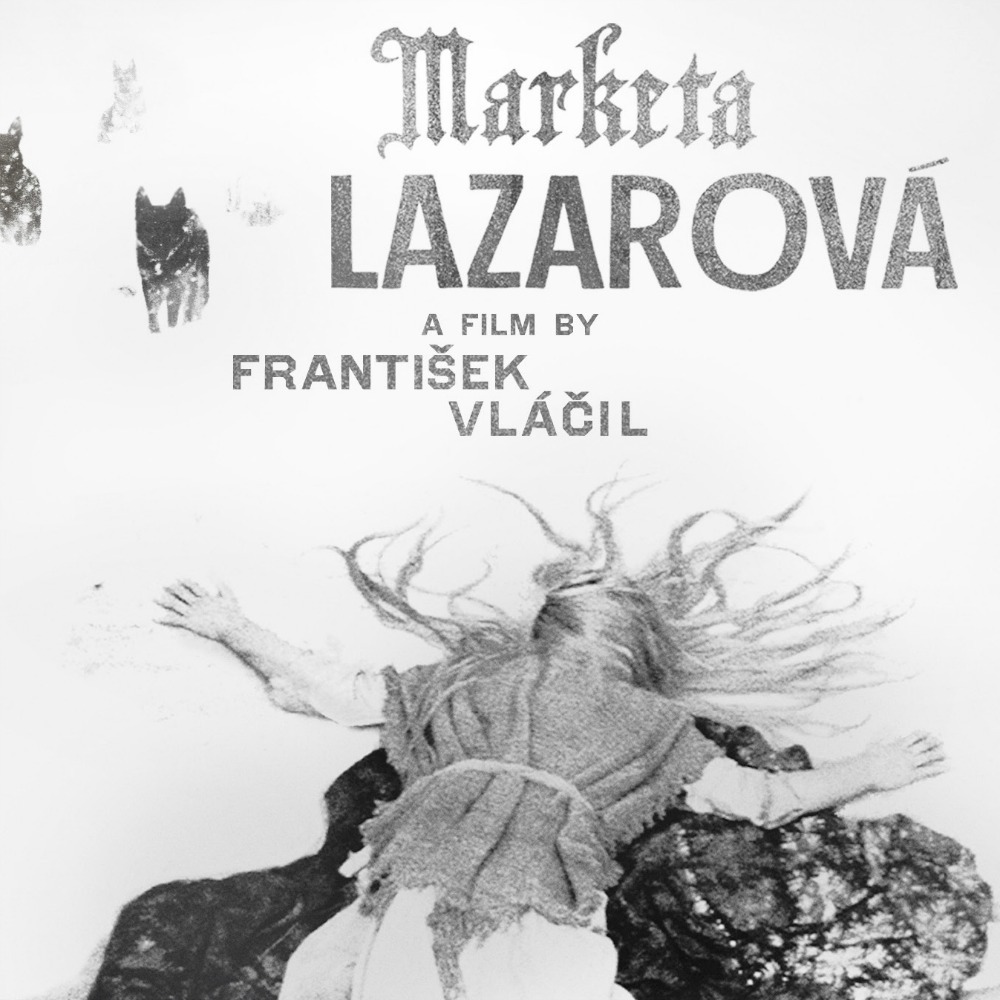


František Vláčil’s Marketa Lazarová (1967) is a virtual terra incognita. Thirty years after its release, it was named overwhelmingly by a poll of Czech critics and filmmakers as the best movie ever produced in Czechoslovakia, yet it remains little known outside its native land. Even as national epics go, Marketa Lazarová is unusually off-putting to outsiders. Violent and anti-heroic, the movie opens on a note of mordant self-deprecation (“This tale was cobbled together and hardly merits praise”) and goes on to represent thirteenth-century Bohemia as a backwater of Conan the Barbarian’s Hyperborean Age—the province of halfwits, rapists, and brutes.

Aside from repeated, if intermittent, screenings at the Brooklyn Academy of Music (and a relatively recent Vláčil retrospective at the Film Society of Lincoln Center), the movie has hardly been shown in the United States since its 1974 American release, for which it was shortened by over an hour. (Supremely unimpressed, The New York Times at the time characterized Marketa as “a colossal—and very near interminable—hodgepodge of medieval mayhem and myth, leaden symbolism and bloated piety,” featuring characters of “such unmitigated savagery that next to them the Visigoths would resemble a Red Cross mercy mission.”) Now released as a Criterion DVD in its full 165 minutes, Marketa Lazarová may finally reach a wider American audiences in all its sprawling glory.

Certainly, the film has an impressive pedigree. Vláčil adapted his labor of love from a 1931 novel by Vladislav Vančura (1891–1942), an expressionist Czech writer, avant-garde activist, independent filmmaker, and (per the movie’s credits) “people’s artist.” In addition to being a pre-war Communist (though he was expelled from the Party in 1939), Vančura was also a wartime martyr, one of many Czech partisans who were executed in reprisal for the assassination in Prague of Reichsprotektor Reinhard Heydrich.

Vančura’s Marketa Lazarová is a mock epic, depicting the savage feud between two rival brigand families, the pagan Kozlíks and nominally Christian Lazars, in the wilds of medieval Bohemia. Vančura was an almost untranslatable master of word play, and here invented a new Czech idiom, at once modernist and archaic, to create, in effect, a new shared geneology. The Czech writer and film historian Josef Škvorecký called Vančura’s lusty yarn a “novel of momentous importance in the history of Czech literature.” Evidently, the novel also had much to say to the young, multinational state that was interwar Czechoslovakia; despite its avant-garde underpinnings, it was his most popular and commercially successful work.

To Read the Rest

Thursday, September 27, 2012

ENG 281 Week 7: Shortbus (USA: John Cameron Mitchell, 2006)


Shortbus (USA: John Cameron Mitchell, 2006: 101 mins)

"In the old days, when you couldn't show sex on film, directors like Hitchcock had metaphors for sex (trains going into tunnels, etc). When you can show more realistic sex, the sex itself can be a metaphor for other parts of the character's lives. The way people express themselves sexually can tell you a lot about who they are. Some people ask me, 'Couldn't you have told the same story without the explicitness?'. They don't ask whether I could've done Hedwig without the songs. Why not be allowed to use every paint in the paintbox?" --John Cameron Mitchell, "How to Shoot Sex: A Docu-Primer" (2007): Shortbus Region 1 DVD release (Th!nk Film)


Adams, Tim. "Everybody's Doing It..." The Guardian (November 26, 2006)

Aftab, Kaleem. "Shortbus." Collective (November 30, 2006)

Ballard, J.G. "Car Crash"; "Sex x Technology = The Future"; "Pornography"; "How I Work." Quotes (San Francisco: Re:Search, 2004: 238-247; 277-279; 332-333.

Benton, Michael Dean. "American Sex and Sexuality 2.0" Dialogic(May 27, 2010)

---. "Gender and Sexuality at the Carnegie Center." North of Center (January 29, 2010)

---. "Getting off on John Cameron Mitchell’s Shortbus: American Sex and Sexuality." North of Center (March 30, 2011)

---. "Review of Straightlaced: How Gender’s Got Us All Tied Up." North of Center (October 13, 2010)

Browning, Barbara, et al. "The Lure and the Blur of the Real." Philoctetes (March 13, 2010)

Crowell, Steven. "Existentialism." Stanford Encyclopedia of Philosophy (Revised edition: 2010)

Dargis, Manohla. "Naughty and Nice in a Carnal Carnival." The New York Times (October 4, 2010)

Deep Throat (USA: Gerard Damiano, 1972: 61 mins)

Dubowski, Sandi. "Non-Stop Erotic Cabaret: John Cameron Mitchell pushes the sexual boundaries once again in Shortbus." Filmmaker (Fall 2006)

"Existentialism." Wikipedia

Fauth, Jürgen. "Shortbus." About (No Date)

Foucault, Michel. "Of Other Spaces." (This text, entitled "Des Espace Autres," and published by the French journal Architecture /Mouvement/ Continuité in October, 1984, was the basis of a lecture given by Michel Foucault in March 1967.)

Hudson, David. "Sex in the Movies." Green Cine (2005)

Jhally, Sut. "Codes of Gender: Identity and Performance in Popular Culture." (Media Education Foundation, 2009) [documentary--available online]

Lewis, Jon. "Real sex: aesthetics and economics of art-house porn." Jump Cut #51 (Spring 2009)

Macio. "Redefining Our Relationships: An Interview with Wendy-O Matik." Revolution By the Book (February 19, 2010)

Oshima, Nagisa. "Sexual Poverty" Cinema, Censorship, and the State: The Writings of Nagisa Oshima. The MIT Press, 1993

"Polyamory."
Wikipedia (No Date)

"Sexual Orientation." Wikipedia (No Date)

Shaw, Richard. "Are the U.S.A.'s Independent Films a Distinct National Cinema?" The Film Journal (2002)

Williams, Linda. "Film Bodies: Gender, Genre and Excess." Film Quarterly 44.4 (Summer 1991): 2-13.

---. "Hard-Core Art Film: The Contemporary Realm of the Senses." Quaderns portàtils #13 (2008)

Wypijewski, JoAnn. "Sexual Healing: Carnal Knowledge." The Nation (September 9, 2009)


Friday, July 6, 2012

John Bredin: 2 or 3 Ways Godard Taught Us How to Speak and Live

2 or 3 Ways Godard Taught Us How to Speak and Live
by John Bredin
Acidemic


I highly recommend Jean Luc Godard's Two or Three Things I Know About Her to shy people. To those poor souls who, like my former self, have had their speaking agency crippled, reducing them to verbal mice. Such radical withdrawals from the speaking world are often the result of being smothered by a patriarchal, authoritative and oppressive family, school system, or society. In my case, it was all of the above.

Mindful of the healing and transformative power of art, for the reticent of speech I bring a message of radiant hope: a nugget of cinematic wisdom distilled from what critic J. Hoberman calls Godard's greatest masterpiece. (As founder of the French New Wave movement in modern cinema, Godard is, arguably, one of, if not the most important, avante garde filmmaker of all time.) Deciphering lessons from Two or Three Things which, in a burst of validation from the zeitgeist for its continuing relevance, Film Forum in New York City screened both last fall and this spring you might be inspired, like I was, with the epiphany that it's not too late for you to achieve the exalted state of verbal freedom; the intoxicating, liberating, yet simple pleasure of being able to share (in a calm, thoughtful and nuanced manner) the cognitive and affective music of your soul with others.

In Two or Three Things Godard offers humanity nothing less than a filmic template for bold and authentic communication in the world: an aesthetically rich and pedagogically fertile piece of language curriculum that bears repeated visits. Without exaggeration, I'd call it a Linguistic Declaration of Independence. Notice, if you will, how the film celebrates the miraculous potential of spoken language, while at the same time interrogating it in what linguists refer to as a meta-talk, or talk about talk fashion often through the power of amazingly simple, wonder-provoking phrases.

For example, whenever Juliette the bored housewife who moonlights as a prostitute addresses a person, the camera, or thin air with a random thought that just popped into her head (I know how to talk; Let's talk together; Together is a word I like.) or when Robert, Juliette's husband, engages in that remarkable see-saw dialogue with a strange woman in the café (Say words; Do you know what talking is? Talk about something interesting.); or the pretty girl at the bar, whose deer-in-the-headlights narration of the simple details of her life startles us with its unassuming transcendence (I like to take walks, ride my bike for fun, go to the cinema two or three times a month. I like books); or when Godard himself, intoning with his whispery, philosophical voiceover, decides to interject a thought or two because he's the auteur (filmmaker as author) and can talk whenever he damn well pleases we're treated to a model of the magical possibilities of human speech.

Shy people, take notice.

Sometimes we become shy (and I myself still feel shy at times, depending, naturally, on who I'm with, or the situation), better still, let me phrase it a different way: we say that we're shy, or inarticulate, or afraid to talk, when in reality we're simply numbed by over-exposure to the prepackaged speech of movies and television shows: talk that's fakely fluid in the Hollywood sense. After watching actors speak brilliantly, dashing off hilarious applause lines as if they were talking naturally when, in reality, they spent days or weeks memorizing a pre-written script by comparison, our own conversational offerings might appear flat and boring to us. Certainly too, in a media-saturated age such as ours, because of our overexposure to glib, slick, oily-tongued, sonorous anchor people and celebrities, one could easily see how a person might get the false, even monstrous impression that this is how real people should talk. Unable to achieve such a bizarre standard of faux eloquence in our own speech, we clam up.

Philosopher Maxine Greene, critiquing such indurations in the mundane, talks about the need to resist passivity, to, partly through reflective art encounters she says, escape submergence in the everyday, the routine, the banal. Such submergence ought to include our current mass drowning, if you will, in a sea of pop cultural and media kitsch: a filling up of our heads, like the white cream inside a Twinkie, with a combination of advertisements, pop cultural fluff, and the grave pronouncements of the talking heads. Might such an inexorable assault on our cognitive and aesthetic apparatus tamp down our capacity to generate our own unique and creative thoughts, disabling our ability to write (and speak) our own essays to the world?

Godard offers us a cure to such a paralysis of language in Two or Three Things: an extraordinary pastiche of verbal and visual images, philosophy, and politics, that many critics have likened to an essay on film. As essays go, of course, it's worth noting that the traditional, written kind from the celebrated classics of Montaigne (Of Experience) and Emerson (Self Reliance) right up through today's brilliant NY Times pieces by Paul Krugman, Bob Herbert, and occasionally I'll grant, David Brooks offers one of the most powerful and flexible vehicles to tell our stories and richly express the complexity of our thoughts, questions, wonderings, and theories on any given topic.

To Read the Rest of the Essay

Wednesday, January 11, 2012

Girish: Difficult Cinema

Difficult Cinema
Girish


I've been wondering: What does it mean for a film to be difficult? Are there multiple ways in which films can be difficult? To put the question to myself in a more personal and subjective way: What are some films or filmmakers that I find difficult? And why?

I recently watched Andrei Rublev (1966), a remarkable and quintessential work of cinematic modernism. It can be called difficult for many reasons: it's three and a half hours long; the narrative is episodic and discontinuous; the film is structured in the form of chapters but often there is little idea of how much time has elapsed between them; there are dozens of characters, and the relationships between them are not always clear; to complicate matters, the same actors turn up in multiple roles through the film; Tarkovsky frequently drops narrative and character in order to focus on the elements (earth, air, water, fire) in an immersive, tactile way. In and beyond matters of plot, action, character and psychology, Tarkovsky poses challenges to interpretation, especially given the central theme of the spiritual -- the non-material, the intangible -- that runs through the film.

Robin Wood has a wonderful passage on the subject of difficult cinema in a 2004 essay on Claire Denis' I Can't Sleep. It appears in a section he titles "Confessions of an Incompetent Film Critic." Let me quote it at some length:

For people of my generation, who grew up in the 1940s/50s on an exclusive diet of classical Hollywood cinema (with the occasional British movie), the European ‘arthouse’ cinema always presented problems which linger on even today, a simple basic one being that of following the plot. This is not because the plot is necessarily complex or obscure, but, frequently, because of the way in which the characters are introduced and the action presented. When I grew up there was remarkably little serious criticism available (not much beyond the weekly reviews), and film studies courses in schools or universities were not even thought of. I was seventeen when I saw my first foreign language film (Torment/Frenzy [Hets, 1944], by Alf Sjöberg, from an early but already characteristic screenplay by Ingmar Bergman). I knew from the reviews that it would carry me far beyond anything I had seen previously, both in style and subject-matter, and my hand was trembling when I bought my ticket. I believe I had great difficulty following it (my first subtitles, not to mention extreme psychological disturbance). Fifty-five years later I still have the same problem when confronted with the films of Claire Denis (or Michael Haneke, or Hou Hsiao-Hsien…). The habits acquired during one’s formative years are never quite cast off; when I showed I Can’t Sleep to a graduate film group last year, my students corrected me over a number of details and pointed out many things I hadn’t noticed, although this was their first viewing of the film and I had already watched it three times. A classical Hollywood film – however intelligent and complex – is dependent on its surface level upon ‘popular’ appeal and its action must be fully comprehensible to a general audience at one viewing, covering all levels of educatedness from the illiterate to the university professor. (The same was of course true of the Elizabethan theatre – see, for example, the conventions of the soliloquy and the aside, wherein a character explains his/her motivation, reactions or thoughts to the audience). One of the cardinal rules was that every plot point must be doubly articulated, in both the action and the dialogue; another was the use of the cut to close-up that tells us ‘This character is important’; yet another, the presence of instantly recognizable stars or character actors. All of these Denis systematically denies us. It is a part of her great distinction that her films (and especially I Can’t Sleep, arguably her masterpiece to date) demand intense and continuous mental activity from the spectator: we are not to miss a single detail or to pass over a gesture or facial expression, even if it is shown in long shot within an ensemble, with no ‘helpful’ underlining and no 'spelling out' in dialogue.

To Read the Rest of the Essay