Showing posts with label Extreme Films. Show all posts

Monday, August 12, 2013

Irreversible (France: Gaspar Noé, 2002)


Irreversible (France: Gaspar Noé, 2002: 97 mins)

Britt, Thomas R. "Lower Depths and Higher Aims: Death, Excess and Discontinuity in Irreversible and Visitor Q." Cinephile 5.1 (2009)

Krautheim, Graeme. "Aspiring to the Void: The Collapse of Genre and Erasure of Body in Gaspar Noé’s Irreversible." Cinephile #4 (Summer 2008)

Palmer, Tim. Brutal Intimacy: Analyzing Contemporary French Cinema. Middletown, CT: Wesleyan University Press, 2011. [Professor has a copy]

Sharett, Christopher. "The Function of Film Criticism at Any Time." Film International (April 29, 2017)

Wood, Robin. "Against and For Irreversible." Film International (April 5, 2011)

Friday, July 20, 2012

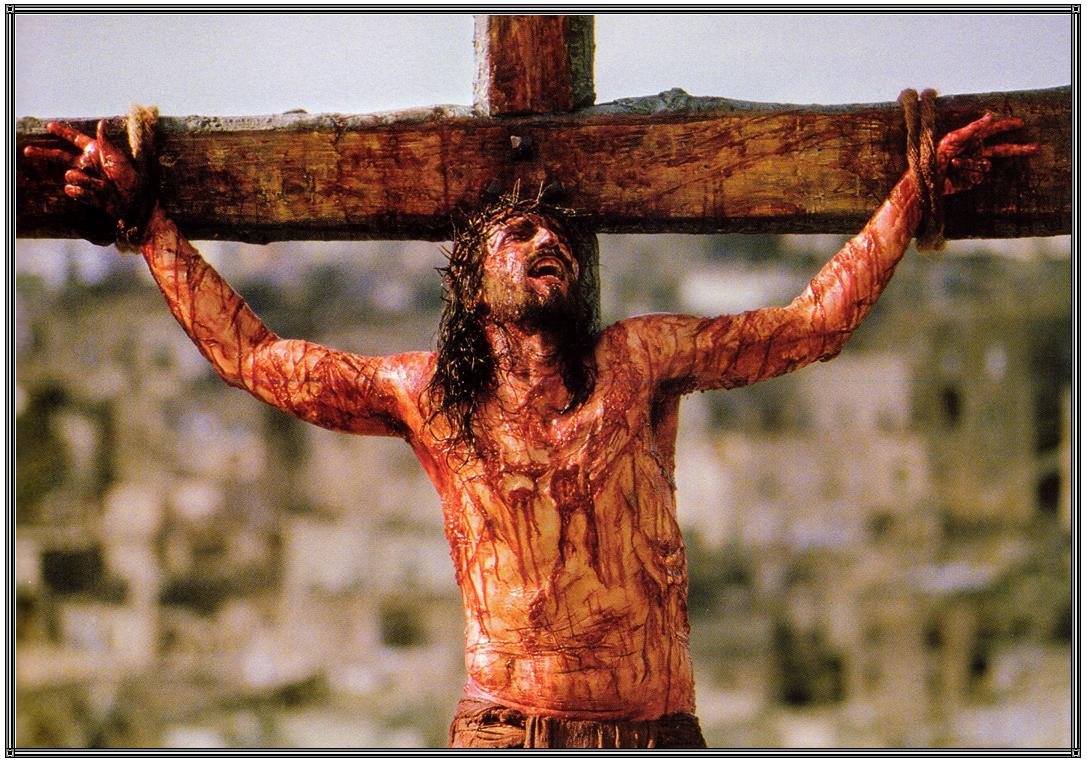
Michael Koresky: Consider the Source -- On The Passion of the Christ

Consider the Source: On The Passion of the Christ
by Michael Koresky
Reverse Shot


I opened my wallet for Jesus. And then, after paying the ten dollars and twenty-five cents, sitting through the ear-splitting, retina-scalding Regal Cinemas’ 2wenty (“Remember to arrive at the theater early!”), ads for Eclipse breath-freshener and Coca-Cola, bulbous oversized M&M men and a TNT “We Know Drama” sensory overload, I was ready to be saved. Lifted out of my seat, perhaps, and brought back down into my chair just in time for the beginning of lent.

Alas, in the end, it was a movie. A mere movie. Mel Gibson’s brilliantly cynical marketing strategy, buoyed by the ADL’s advance work, lured even us non-believers (sinners) into the theater; certainly we didn’t expect to emerge as right-wing Christian fundamentalist converts, but we had every right to think we would be witnessing an honest representation of human and artistic faith, a spiritual roadmap to the psyche of a filmmaker and actor who felt driven, even instructed by God, as he has claimed, to create a cinematic likeness of the divine. It’s not essential that a moviegoer agrees with the political or religious implications of the images emblazoned on the screen, but that the images translate as a response from the filmmaker’s soul, that we believe we are witnessing the gospels as Mel himself sees them. The sheer divine force offered by Pasolini, Scorsese, by Bresson and Burnett and Spielberg, by Alexanders Payne and Sokurov, manifest in images that relinquish themselves to whatever artistic means necessary, not in shameless grandiosity that wishes to pummel the viewer into submission, into terrified acceptance. Gibson may find disingenuous the earthy benevolence of Pasolini’s Christ and the psychological torment of Scorsese’s, the lyrical allegory of Bresson’s Balthazar and Spielberg’s E.T., the spiritual personification of Payne’s Warren Schmidt or Sokurov’s cancer-ravaged saint-mother; he wants a more direct address, to make you feel every thrust of the rusty nail as it’s hammered into Jesus’s palms, to clutch your own shoulders as Jesus’s arm is ripped out of its socket, to cover your eyes in gratitude when the crucified thief’s eye is plucked out by a vengeful crow, to reverently ooh, aah, and shriek when Jesus is scourged, his back torn and ripped open into a hundred fleshy strips. Apparently to Gibson, there is no metaphor in religion; faith manifests itself as a spiritual dead-end, a believe-it-or-be-damned expression of finality. Of course Gibson, progeny of his fundamentalist missionary father’s terrifyingly stubborn outmoded beliefs, ended up a Hollywood actor—that particular “dream factory” churns out endless expressions of American complacency every year, cheerless damning spectacles of moral righteousness and unambigious carnal pleasures. Of course Mel Gibson, though a self-avowed man of endless spiritual vitality, can only depict the divine through the employment of hundreds of buckets of stage-blood. With its ludicrous, Hollywood-fortified conviction (not the same thing as faith, incidentally), Passion may be the world’s first completely banal Jesus Christ film. And though it’s remarkably, hopelessly literal, it was certainly waiting to happen. It had to happen.

If 2000’s Gladiator ushered in the new Bush regime, then perhaps Gibson’s blockbuster is the new 21st-century’s first true coercively conservative “classic.” Rarely has a film with a fundamentalist core been so blatantly conceived, so forthright in its admissions. Every decade of American film, though never preoccupied with anything grander than itself, nonetheless ends up a product of its own political backdrop. First Blood and its subsequent sequels became emblematic of the Reagan era, literally winning Vietnam back from the liberals, reasserting the swaggering machismo of the American hero that Seventies Hollywood attempted to all but decimate. And just as Stallone enacted Reagan’s cloudy-headed right-wing version of recent history, Gibson’s Christ—“compassionate” Conservative, deliverer of that old-tyme religion—emerges from the tomb at just the moment of the Bush administration’s attack on civil liberties, and the attack on the Civil Rights of American gays launched by Dubya himself with full-on, unabashed old-testament condemnation. Those who speak out against Gibson’s film are automatically stigmatized as leftist rabble-rousers and hapless atheists; to deny its physical impact or so-called technical grandeur is to supposedly denounce Gibson’s personal belief system. What’s more essential is to realize that when Gibson’s savvy propaganda piece, meant to inflict a tough-love Jesus on the nation’s wayward souls, floods into 4,000 screens, another dam between Church and State begins to crumble. The youngsters of the Clintonian Nineties, finding solace in the emergence of a truly multicultural pop mainstream, need to be reclaimed by the right, shorn of their piercings and tattoos, and brought back to Sunday school; who better to do that than Jesus himself, this time, like Rambo, stripped to the waist, chained and whipped, flesh torn and limbs broken, but never down for the count?

To Read the Rest of the Essay More: Jeff Reichert: Jesus Christ Superman

Monday, July 9, 2012

Kim Morgan: You Have 30 Seconds to Leave the Theater" - Gaspar Noe's I Stand Alone

You Have 30 Seconds to Leave the Theater" - Gaspar Noe's I Stand Alone
by Kim Morgan
Sunset Gun


I have missed Gaspar Noé.

The French enfant terrible who helmed one of the greatest pictures of the 1990’s, I Stand Alone, and who, with Irreversible, placed Monica Bellucci in a situation that angered even those OK with Susan George’s episode in Straw Dogs, had been absent from the screen far too long. Yes, he made a short for the sexually explicit Destricted project, and yes there are the condom commercials from years back, but Mr. Noé needed another full length feature under his (whipping) belt. To say I'm greatly anticipating his newest, Enter the Void would be an understatement.

The director, heavily influenced by '70s cinema, William Castle shock-a-tude, pornography, Godard, Céline, Nietzsche and (as I have argued, whether he knows this or not), even Thomas Hardy, was the great Gallic hope for a new generation of savage filmmaking. Unlike some current filmmakers who traffic in mere shock, or art house directors striking a transgressive pose, Noé is a genuine artist, but unpretentious -- a man who loves nothing more than upsetting his audience (or, in the case of Irreversible, making some faint), while injecting his screaming compositions with substantive thought, intelligence and philosophy.

So hearing that Noé will be releasing a new Noé vision got me excited, and in the mood to re-visit his debut blast of brilliance, over ten years later, 1998’s I Stand Alone. This is the movie that caused a daily critic to walk out during the screening I attended, this is the movie that bonded me with my sister (long story), and this is the film that I told a colleague to see on a date. That advice didn’t work out so well.

When first reviewing the blisteringly brilliant picture, I quoted an anecdote by director Paul Schrader. Schrader said:

“I had an interesting lunch recently with a French director named Gaspar Noé who wanted to do a film with me, something with violence and pornography and all that. And I said to him, 'I don't think anyone's shockable anymore.'"

Now I admire, sometimes revere Paul Schrader, and I would probably agree with him at that moment, but with I Stand Alone (and the latter Irreversible) he was positively wrong. For Noé had not only made one of the most shocking pictures in decades, but also one of the most stylistically impressive, emotionally challenging, thematically intimidating, astoundingly touching and, in its own warped way, weirdly funny. I Stand Alone, or Seul Contre Tous (Alone Against All) is a hair grabber that drags you around the muck and pushes your face into its world so far that -- and this is rare with such hard cinema -- you’ll experience moments of such bizarre, hideous beauty that you’re left significantly moved. It attacks one's senses with such transgressive power that by its end, one feels flustered, simultaneously full and empty. I Stand Alone rattles in your brain long after the movie's disquieting end.

To Read the Rest of the Essay

Sunday, June 24, 2012

Severine Benzimra: French Cinema and French Sexual Attitudes and Culture

State of French Cinema: French cinema and French sexual attitudes and culture
by Severine Benzimra
Acidemic


French sexual attitudes and culture have wildly evolved within the last 20 years. A TV documentary which premiered on June 14th on M6, one of the free French channels, should help us grasp the breadth of the evolution.

Les Français, lamour et le sexe (French people, love and sex) is based on the latest statistics, interviews, and the analysis of sexologist Pascal de Sutter. The first episodes deal with the way French people make love: seduction, preliminaries, and positions; orgasm and fantasm. In the midst of the evening, more than 3 million people were watching - about 21% of the audience.

French cinema naturally mirrors these evolutions, sometimes in a confused way. Sexual repression provokes artistic provocation; cinema might seem less "advanced" (especially to people claiming for an equal treatment of teenagers and grown-ups, gays/lesbians and heterosexual people) in France than in the USA for this reason. Globalization can lead to self-reflection but also to some alienation. When watching US movies, French people often ignore that some scenes were censored in the USA or that a movie was X-rated. Some might consider a kind of race toward freedom is open.

Censorship officially disappeared in French cinema in 1974. It was the end of the Gaullist period and the first year of the presidency of Valéry Giscard d'Estaing; the government wasn't so liberal yet. At the end of 1975 a law was adopted concernng pornographic and extremely violent movies. Porno movies couldn't be shown in traditional movie theaters; they were reserved for specialized theaters. The next major move was made in 2000 with the restriction of some movies to those over 18 (after the Baise-moi affair). Before this, movies could be forbidden to viewers either under age 16 or 12.

French directors aren't interested in making familial movies, lets admit it. Movies for kids are mostly animated or made for TV. Beware if you want to take the pony-club class to see Dance with Him; they might leave laughing about the effects of some perfumes on a stallion or of a lady training with a mechanical horse, or the heated discussion of gluteal muscles. Some parents will consider these better topics than others, but there's no consensus. What Americans call family movies are called kid's movies or --exceptionally-- all-audience movies in France (for movies about nature especially, like Jacques Perrins' Peuple migrateur). In December 2009, the town of Libourne organized an election of the best family movie. Seven of the 16 selected films were foreign movies: Star Trek, Ice age 3, Slumdog millionnaire, Harry Potter and the half-blood prince, Up, the Imaginarium of Doctor Parnassus, and Gran Torino. The French movies selected were two movies on nature (Home, Loup), two movies inspired by mythical books (Le Petit Nicolas, Lucky-Lucke), some comedies (Neuilly ta mère, Rose et noir), the very funny French James Bond (OSS 117, Rio ne répond plus), a Jeunet movie (Micmacs à Tire-Larigot), and the very commercial Arthur et la vengeance de Malthazar (produced by Luc Besson).

The French approach to onscreen sex differs from the American approach mainly through its form rather than its content. American directors tend to make "pretty" scenes, while French people shoot them more naturally (less filters, music, cuts). An exception: love scenes in Claude Brisseaus movies, like between the actresses of Les anges exterminateurs.

Americans tend to shoot very handsome and young actors, which isn't the case in France. On the contrary, the representation of teenagers having sexual intercourse is considered more shocking. Ken Park was forbidden to the under-18, an exceptional measure: the sexual scenes were considered a bad encouragement for teenagers (risk of AIDS contamination, etc.) as for adults (pedophilia, etc.). Shouldn't sex be attractive? Oh, no but it must be personal. Sexual scenes aren't supposed to, on this side of the ocean, attract the audience. They represent a part of the life of the character that it is necessary to represent. They aren't meant to excite. Sexual excitation is linked to imagination to be provided by all-audience movies (meaning not the audience of pornographic/erotic movies) if it can be provided by a movie, an idea on which French people wildly discuss and disagree. Most French people would tell you that the image neutralizes the imagination in this field and suggest you to read, or ask someone to read you erotic littérature. It might seem that the subjectivity of beauty (its effect on libido) is much more emphasized in the USA. French actors and actresses don't wish to be called sex symbols. To be "attractive", "sexy", or "hot" is not a compliment in France - traduce it and it might well be received as an insult. Especially "hot." If you look hot because you want it, you are vulgar (and thus not so hot). If you're an actor/actress who looks hot without wanting it, you're a bad actor/actress. Cold can be hotter - see Grace Kelly in Hitchcock's movies, Romy Schneider in any movie, or Catherine Deneuve - they strike one's imagination. A perfect body is cold, secretive, tends to hide itself, while an overweighted, underweighted, aged body is seen as much hotter. The hero of Le roi de l'Evasion (below), a 2009 movie by Alain Guiraudie, a large 43 year old man, had four partners: a "beur" (French-North African) girl, and several elder men.

To Read the Rest of the Essay
Sunday, June 10, 2012

Steven Shaviro: After Hope - The Life and Death of a Porno Gang

After Hope: The Life and Death of a Porno Gang
by Steven Shaviro
Acidemic


Mladen Djordjevic's Life and Death of a Porno Gang (Serbia, 2009) contains explicit representations of sex and violence, including scenes of golden showers, zoophilia, animal slaughter, rape, murder, wartime atrocities, the production of snuff films, and suicide. In its extremity, Porno Gang has a lot in common with its sister film, Srdjan Spasojevic's A Serbian Film (2010), with which it shares a cinematographer (Nemanja Jovanov), as well as the plot premise of porno actors lured into making snuff films. Both of these movies allude, at least implicitly, to the American torture porn franchises of the past decade (the Hostel series and the Saw series). They also bring to mind the controversial but highly visible and critically acclaimed transgressive art cinema of Western Europe and East Asia, including such works as Gaspar Noë's Irreversible (2002), Pascal Laugiers's Martyrs (2008), Lars von Trier's Antichrist (2009, below), Takashi Miike's Audition (2000), and Park Chan-wook's Vengeance trilogy (2002-2005).

However, Life and Death of a Porno Gang stands out among all these films for a number of reasons. It is unique in terms of its style, in terms of its particular geographical and historical location, and in terms of the types of social and economic conditions that it explores. In the first place, Porno Gang rejects both the commercial-genre functionalism of movies like Hostel, and the art-film self-consciousness of directors like Noë and von Trier. Instead, it adopts an informal, low-budget aesthetic; it has the look and feel of a video documentary. The film is largely shot in natural light, in real locations, with small, handheld video cameras, the same kind of cameras that the characters within the film themselves use. In this way, Porno Gang picks up from Djordjevic's previous film, Made in Serbia (2005), a downbeat documentary about the small size and limited horizons of the Serbian porn industry. Porno Gang retains its predecessors' look and feel, as well as subject matter, even though it is a fictional film, entirely scripted and staged.

Life and Death of a Porno Gang also stands out for the way that it tends to shy away from, and representationally underplay the horrific violence that it nonetheless explicitly depicts. This is its biggest difference from A Serbian Film, which presents its depraved visions with a hallucinatory hyperrealism, often pushed to the point of campy excess. In contrast, Life and Death of a Porno Gang remains largely naturalistic, and is not edited for shock value. Indeed, Djordjevic's editing style is oddly elliptical; it gives us buildups, but it often cuts away before the horror it depicts has had enough time to register in its full intensity. Porno Gang neither dwells on its carnage with long takes and a fixed or slow-moving camera, nor riles up its viewers with rapid, disjunctive montage. Instead, there is a kind of everydayness to its horror. The film records the experiences of its characters in a manner reminiscent sometimes of a first-person video diary, and other times of reality television. The film's most shocking moments emerge from this background of everydayness, and then quickly recede back into it.

To Read the Rest of the Essay